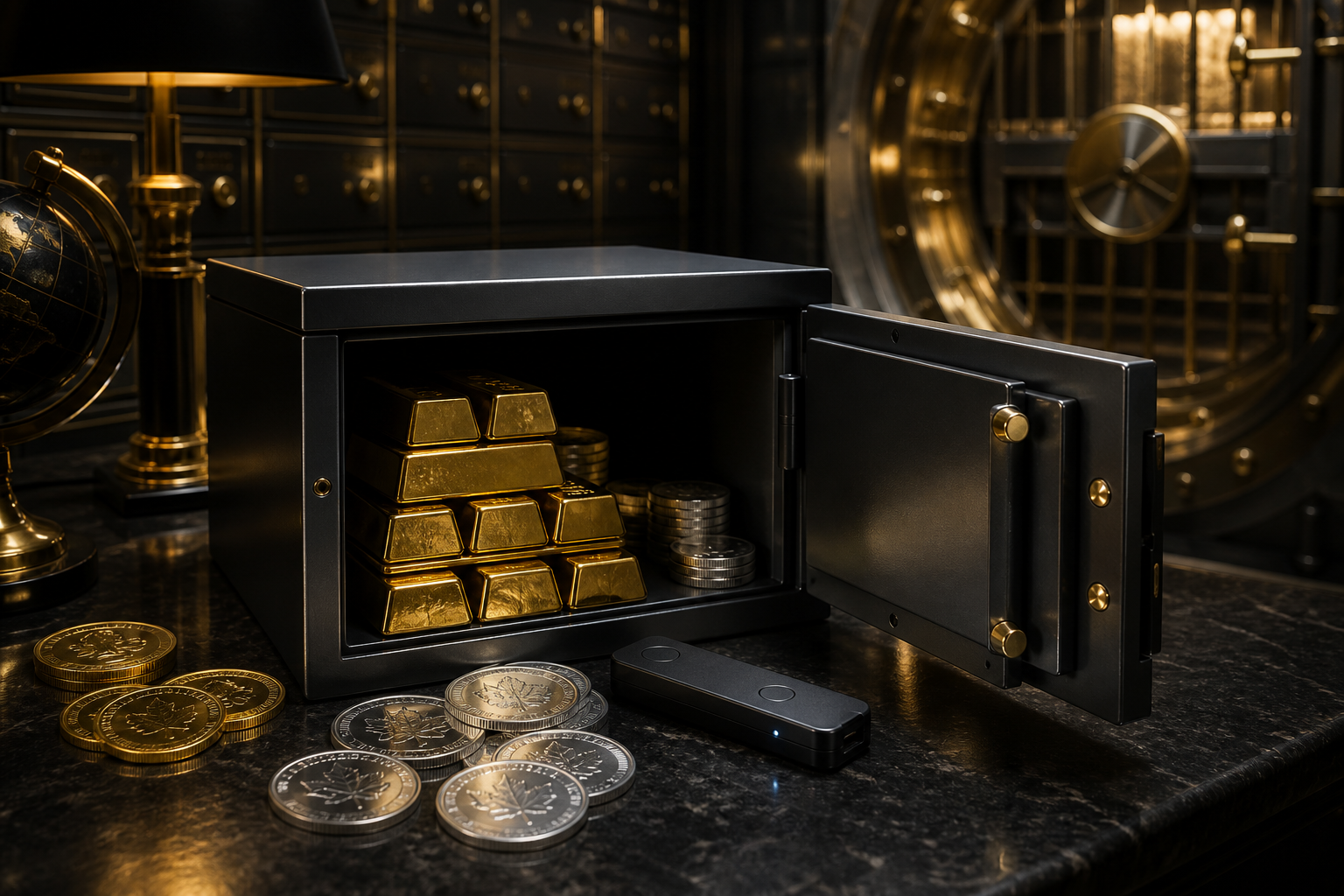
Monedas o lingotes de oro — ¿realmente importa?
Cuando conviertes Bitcoin o Monero en oro físico por primera vez, la elección entre monedas y lingotes puede parecer un detalle menor. No lo es. El formato que elijas afecta a cuánto oro obtienes realmente por tu dinero, con qué facilidad podrás vender parte de tu posición más adelante y con qué fluidez un futuro comprador aceptará lo que le ofreces.
Esta guía analiza las diferencias reales para que puedas tomar una decisión deliberada en lugar de una por defecto.
---
Qué estás comparando realmente
Tanto las monedas como los lingotes se refinan a alta pureza — normalmente 99,9% o 99,99% de oro fino. El contenido de metal no es el problema. Las diferencias residen en el coste de fabricación, el estatus de curso legal, el reconocimiento y la flexibilidad de tamaño.
---
Primas: por qué las monedas cuestan más
Acuñar una moneda es más caro que fundir o prensar un lingote. Las casas de moneda gubernamentales añaden elementos de seguridad, diseños elaborados y valores nominales de curso legal. Ese coste se traslada al comprador en forma de una prima más elevada sobre el precio spot.
- Un lingote de oro de 1 oz de una refinería reconocida suele llevar una prima inferior a la de una moneda soberana de 1 oz como un Maple Leaf o una Britannia.
- Los lingotes más pequeños (1 g, 5 g, 10 g) reducen esa diferencia — su coste de fabricación por gramo aumenta considerablemente, igualando o superando a menudo las primas de las monedas del mismo peso.
- En SwissGoldXMR la prima de compra es un fijo del 2% en todos los productos, por lo que la base al precio spot es uniforme. La diferencia en lo que pagas proviene de la prima de mercado propia del producto, no de un recargo oculto por nuestra parte.
Regla práctica: Si tu prioridad es maximizar el peso en oro por unidad de cripto gastada, los lingotes grandes (50 g, 100 g, 1 kg) suelen ser el formato más eficiente.
---
Divisibilidad: la ventaja de las monedas
Imagina que tienes 100 g de oro en un único lingote y quieres liquidar el 20% de tu posición. No puedes partir el lingote. Vendes todo o nada.
Las monedas resuelven esto de forma natural:
- Una serie de diez monedas de 10 g o cuatro monedas de 1 oz te permite vender una pieza a la vez.
- El resto permanece en la cámara acorazada sin tocarlo.
- La liquidación parcial es más limpia, más rápida y no requiere revaluar un conjunto fragmentado.
Para los tenedores de cripto que piensan en términos de dimensionamiento de posición y salidas parciales — una mentalidad habitual en mercados volátiles — las monedas ofrecen una ventaja estructural que los lingotes simplemente no tienen.
---
Liquidez y reconocimiento
Cuando llega el momento de vender, el reconocimiento importa. Las monedas soberanas — emitidas por casas de moneda gubernamentales — se encuentran entre los productos de oro físico más líquidos del mundo. Distribuidores, bancos y compradores privados las reconocen al instante y rara vez exigen pruebas de ensayo.
Los lingotes de las principales refinerías suizas y europeas (acreditadas por la LBMA) también son muy líquidos, pero las marcas menos conocidas pueden generar mayor escrutinio. Cíñete a nombres consolidados y no tendrás ningún problema.
A través del cámara acorazada suiza y recompra de SwissGoldXMR, todos los productos de nuestro catálogo son elegibles para recompra con un diferencial del 1% — por lo que la liquidez dentro de la plataforma está garantizada independientemente del formato.
---
Consideraciones de almacenamiento
Si tu oro permanece en una cámara acorazada suiza asignada, el formato físico importa poco en el día a día — no lo manipulas directamente. Pero cobra relevancia cuando retiras o vendes:
- Las monedas en denominaciones más pequeñas son más fáciles de enviar en cantidades parciales si alguna vez deseas entrega física.
- Los lingotes grandes son eficientes de almacenar y transferir como una sola unidad, pero requieren más planificación para el acceso parcial.
---
Un marco de decisión sencillo
Házte tres preguntas:
- ¿Cuál es el tamaño de mi posición? Por debajo de 50 g en total, las monedas son casi siempre la mejor opción por su flexibilidad. Por encima de 100 g, tiene sentido combinar formatos.
- ¿Espero vender de forma escalonada? Si es así, prioriza las monedas o los lingotes más pequeños para la parte que podrías liquidar antes.
- ¿Estoy optimizando por peso en oro o por flexibilidad operativa? El peso favorece los lingotes grandes. La flexibilidad favorece las monedas.
Muchos compradores experimentados tienen ambos: una posición central en lingotes de 100 g o 1 kg para mayor eficiencia, y una capa de monedas de 1 oz para salidas parciales flexibles.
---
Cómo consultar lo que está disponible
Las monedas y lingotes disponibles — incluyendo pesos, refinerías y precios actuales en BTC, XMR y USDT — están listados en el catálogo. Si eres nuevo en el proceso, cómo funciona explica cada paso desde la selección del producto hasta la confirmación en cámara acorazada.
No existe una respuesta universalmente correcta entre monedas y lingotes. Pero sí existe la respuesta correcta para tu situación — y ahora tienes el marco para encontrarla.
¿Listo para tener metal suizo de verdad?
Explorar el catálogo