¿Monedas o lingotes? No hay una respuesta sencilla
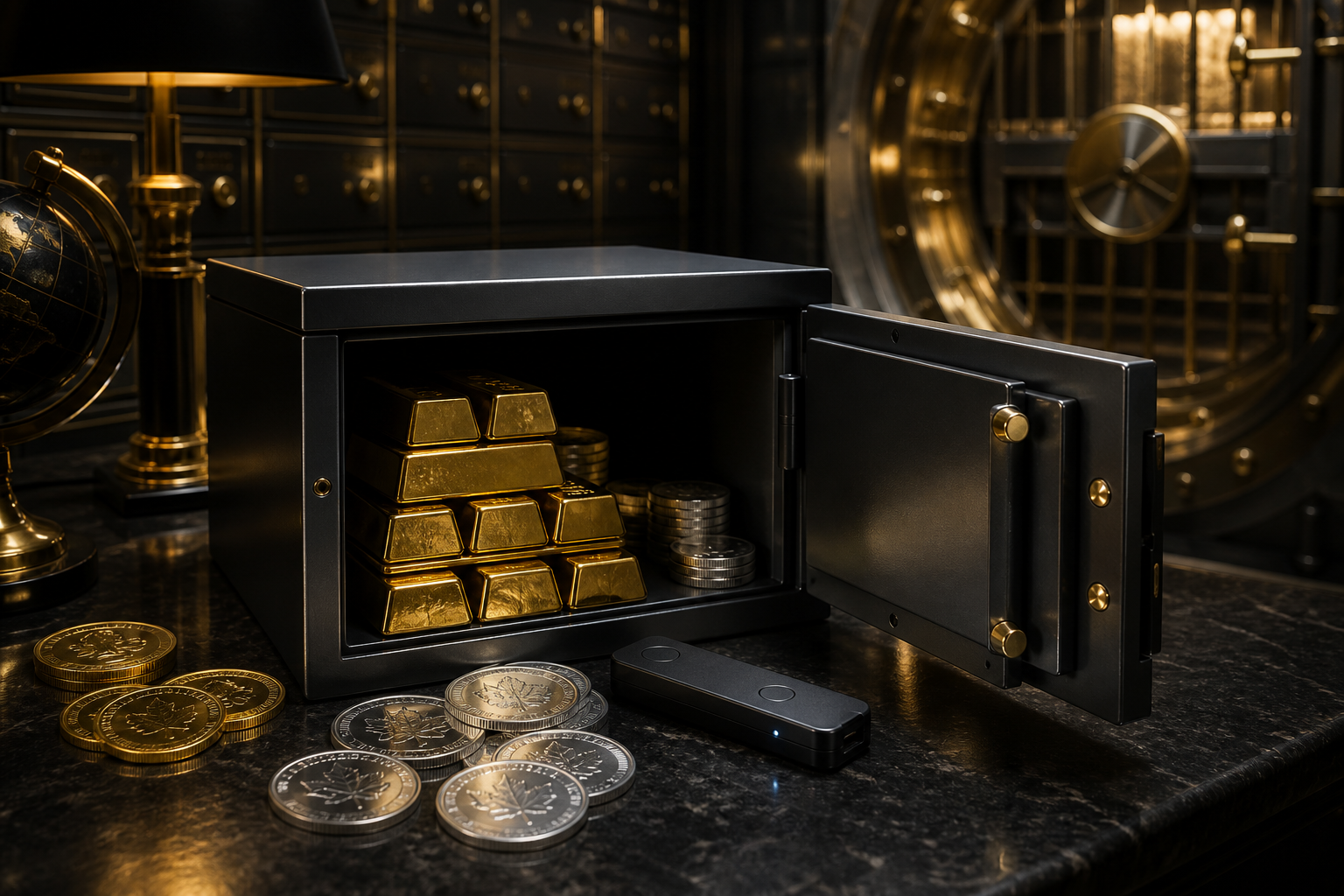
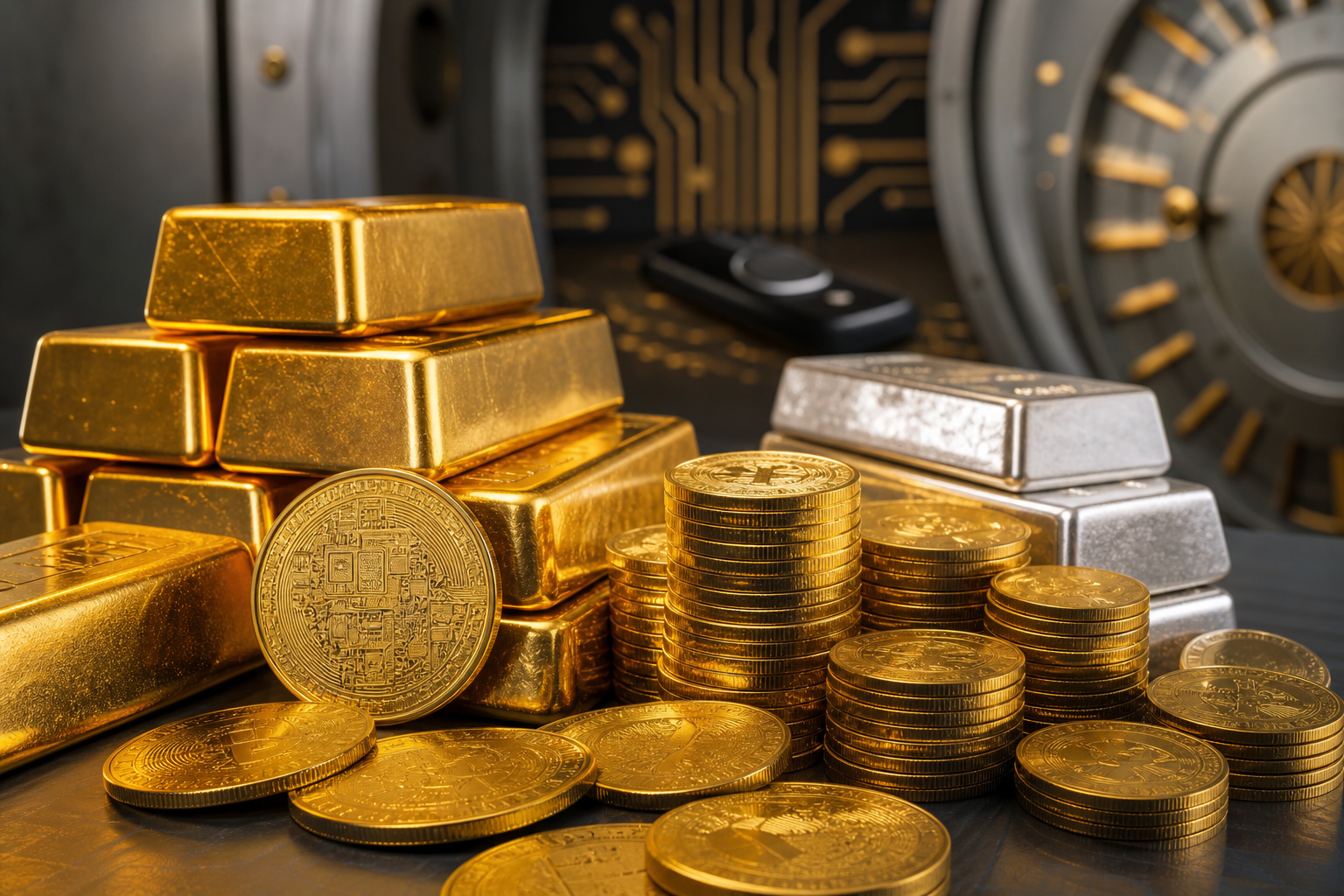
Cuando transfieres valor desde cripto hacia oro físico, la primera pregunta práctica no es *cuánto* — sino *en qué forma*. Las monedas de oro y los lingotes de oro son ambos metal puro al 99,9 %, se almacenan en la misma cámara acorazada suiza y se cotizan en el mismo mercado spot. Sin embargo, se comportan de manera diferente en aspectos que importan a un comprador en cripto: liquidez, eficiencia de costes y flexibilidad.
Esta guía analiza las diferencias reales para que puedas tomar una decisión deliberada en lugar de una por defecto.
---
Primas: los lingotes son más baratos por gramo
La prima es el recargo que pagas por encima del precio spot del oro. Cubre la acuñación, la distribución y el margen del distribuidor.
- Los lingotes grandes (100 g, 250 g, 1 kg) tienen las primas más bajas — a veces solo un 1–2% sobre el spot para los tamaños mayores. Obtienes más metal por cada franco gastado.
- Los lingotes pequeños (1 g, 5 g, 10 g) tienen primas más altas que los grandes, porque el coste fijo de fabricación se reparte entre menos metal.
- Las monedas (Britannia 1 oz, Maple Leaf, Philharmoniker) suelen tener primas de entre el 3 y el 8% sobre el spot, según la casa de la moneda y la demanda actual.
Conclusión: si la eficiencia de costes es tu prioridad y estás comprando una cantidad significativa de una sola vez, los lingotes más grandes te dan más oro por tu cripto.
---
Divisibilidad: las monedas ganan en flexibilidad
Aquí es donde las monedas demuestran su valor. Un lingote de 1 kg es un activo único e indivisible. Si quieres liquidar el 20% de tu posición, no puedes simplemente cortar un trozo.
Las monedas, en cambio, son naturalmente modulares:
- Una serie de diez monedas de 1 oz puede venderse de una en una.
- Puedes reequilibrar gradualmente sin tocar toda tu posición.
- Las denominaciones más pequeñas facilitan donaciones, transferencias o liquidaciones parciales.
Para los tenedores de cripto acostumbrados a enviar 0,05 BTC o 12 XMR, la granularidad de las monedas resulta intuitiva. Los lingotes exigen una mentalidad más de todo o nada.
---
Liquidez y reventa
Ambos formatos son líquidos — el oro es oro — pero la *facilidad* de reventa difiere.
Las monedas de las principales casas de moneda soberanas (Royal Mint, Royal Canadian Mint, Austrian Mint) son reconocidas en todo el mundo. Cualquier distribuidor, en cualquier lugar, las comprará sin dudarlo. Su pureza y peso están garantizados por un gobierno, lo que elimina fricciones en el momento de la venta.
Los lingotes de refinerías acreditadas (PAMP, Valcambi, Argor-Heraeus) gozan de la misma confianza en los circuitos profesionales, pero un comprador particular o un pequeño distribuidor local puede estar menos familiarizado con un lingote de 250 g que con un Maple Leaf. Para el metal almacenado en cámara acorazada y revendido a través de una plataforma como SwissGoldXMR, esta distinción desaparece en gran medida — consulta la página Cámara acorazada suiza & recompra para conocer cómo funciona el proceso.
Punto clave: si alguna vez quieres recibir entrega física y vender localmente, las monedas son más prácticas. Si planeas mantenerte dentro de un sistema profesional de custodia y recompra, los lingotes son perfectamente válidos.
---
Consideraciones de almacenamiento
Cuando el metal se custodia en una cámara acorazada suiza en tu nombre, las tarifas de almacenamiento se calculan generalmente sobre el valor, no sobre el número de piezas. Por tanto, un lingote de 1 kg y cincuenta monedas de 1 oz de valor equivalente cuestan aproximadamente lo mismo de almacenar.
Si en algún momento recibes entrega física, las monedas son más fáciles de transportar discretamente y de guardar en una caja fuerte doméstica. Los lingotes, especialmente los más grandes, requieren una planificación de seguridad más cuidadosa.
---
Un esquema de decisión sencillo
Házate tres preguntas:
- ¿Cuánto estás comprando? Por debajo de unas 5 oz equivalentes, las monedas suelen ser la mejor opción integral a pesar de la prima más alta. Por encima de esa cantidad, los lingotes empiezan a tener sentido económico.
- ¿Quieres flexibilidad para vender por partes? Si es así, elige monedas. Si vas a mantener una posición a largo plazo como un bloque único, elige lingotes.
- ¿Dónde estará el metal? El metal en custodia se adapta igualmente a ambos formatos. La entrega física favorece las monedas.
---
Combinar ambos es perfectamente válido
Muchos compradores experimentados mantienen una posición principal en lingotes por eficiencia de costes y una asignación menor en monedas por liquidez y divisibilidad. No hay ninguna regla en contra — y refleja la forma en que los tenedores de cripto más reflexivos dividen entre BTC (reserva de valor) y activos más líquidos.
Puedes explorar los formatos disponibles en el catálogo y leer más sobre cómo funcionan las compras y el almacenamiento en la página cómo funciona.
---
¿Listo para elegir?
Una vez que sepas qué formato se adapta a tu estrategia, el proceso es sencillo: elige tu producto, paga en Bitcoin, Monero o USDT, y tu metal queda asignado en una cámara acorazada suiza en un día hábil. Empieza con lo que se ajusta a tus objetivos — siempre podrás añadir el otro formato más adelante.
¿Listo para tener metal suizo de verdad?
Explorar el catálogo