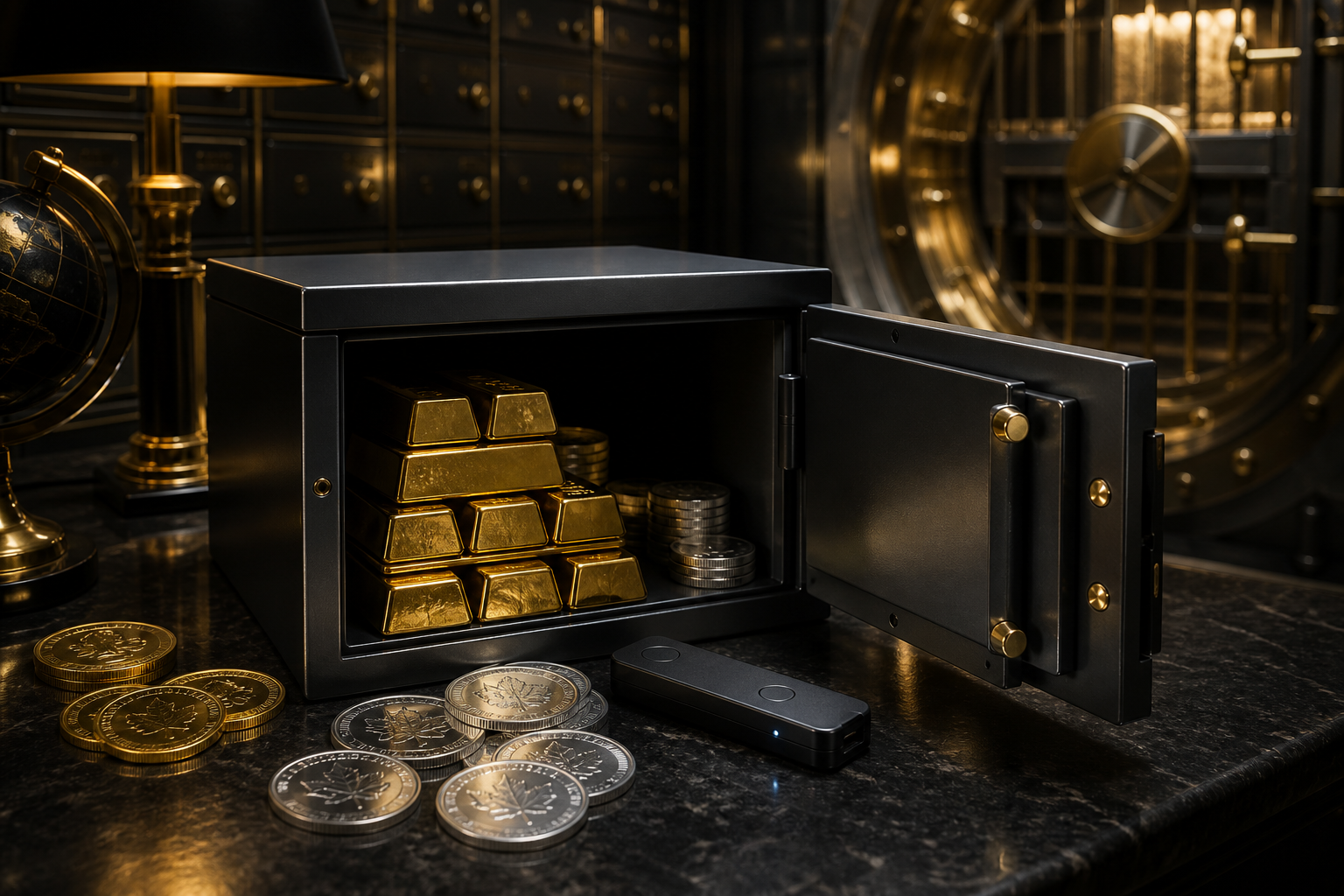
Cuando conviertes Bitcoin o Monero en oro físico, te enfrentas de inmediato a una disyuntiva: ¿monedas o lingotes? Ambos son metal real, asignado. Ambos descansan en una cámara acorazada suiza sin generar rendimientos ni exponerte a riesgos de contraparte. Pero se comportan de manera diferente cuando compras, cuando vendes y cuando necesitas flexibilidad. Entender estas diferencias antes de realizar tu primer pedido te ahorra dinero y evita arrepentimientos.
Qué estás comparando realmente
Una moneda de oro es una pieza acuñada por un Estado — como el Vreneli suizo, el Filarmónico austriaco o el Krugerrand sudafricano — emitida según un estándar legal, con un valor nominal (en gran medida simbólico) y una ley garantizada. Un lingote de oro es un lingote refinado de forma privada u oficial, que va desde 1 gramo hasta 400 onzas troy, sin valor nominal pero con el mismo metal subyacente.
Ambos se cotizan en función del precio spot del oro. La diferencia radica en lo que pagas por encima del spot (la prima) y lo que recuperas por debajo del spot al revender (el diferencial de recompra).
Primas: las monedas son más caras al entrar
Acuñar monedas es costoso. Los cuños, los elementos de seguridad, la certificación legal y la distribución añaden costes. Como resultado, las monedas suelen llevar primas más elevadas sobre el spot que los lingotes de peso equivalente.
- Un lingote de oro de 1 oz puede negociarse al 1–2% sobre el spot.
- Una moneda de oro de 1 oz de una gran casa de la moneda suele negociarse al 3–6% sobre el spot, a veces más en el caso de emisiones de colección o de baja tirada.
En SwissGoldXMR, la prima de compra es un transparente 2% en todo el catálogo — sin comisiones ocultas ni sorpresas en los diferenciales. Esta estructura uniforme facilita una comparación honesta entre formatos. Explora el catálogo para ver los precios actuales de monedas y lingotes en paralelo.
Liquidez: ambos son líquidos, pero de forma diferente
Las monedas lingote más populares — Filarmónicas, Maple Leafs, Britannias — son reconocidas en todo el mundo. Un distribuidor en Tokio o Toronto las valorará a simple vista. Ese reconocimiento global es una ventaja de liquidez real.
Los lingotes de refinerías acreditadas (aprobadas por la LBMA) son igualmente líquidos en los mercados mayoristas, pero un vendedor particular que intente colocar un lingote de 100 g localmente puede encontrar menos compradores dispuestos que alguien que tenga diez monedas de 10 g.
Conclusión práctica: para cantidades inferiores a 50 g, las monedas suelen revenderse más fácilmente entre particulares. Para posiciones más grandes destinadas a la custodia en cámara acorazada y a una eventual recompra institucional, los lingotes son igual de líquidos y más baratos de adquirir.
Divisibilidad: las monedas ganan claramente
Aquí es donde las monedas justifican su prima. Si tienes un único lingote de 100 g y necesitas liquidar el 20% de tu posición, no puedes partir el lingote. Vendes todo o nada.
Las monedas te permiten vender exactamente lo que necesitas:
- Ten diez monedas de 1/10 oz en lugar de una de 1 oz.
- Vende dos monedas cuando las crypto se recuperen y quieras rotar.
- Deja el resto en la cámara acorazada sin tocarlo.
Para los tenedores de crypto acostumbrados a enviar 0,003 BTC o 14,7 XMR, esta granularidad resulta completamente natural. La divisibilidad es el argumento más sólido a favor de las monedas frente a los lingotes.
Costes de almacenamiento y eficiencia
Los lingotes ofrecen un valor más denso por unidad de espacio. Un lingote de 1 kg contiene el mismo oro que aproximadamente 32 monedas de una onza, pero ocupa mucho menos espacio y requiere un solo certificado de ensayo en lugar de treinta y dos. Si almacenas grandes cantidades en una cámara acorazada suiza, los lingotes reducen la carga administrativa.
Para los detalles sobre el almacenamiento en cámara acorazada — incluido el funcionamiento del almacenamiento asignado y el proceso de recompra — consulta la página Cámara acorazada suiza y recompra.
¿Qué deberías elegir?
No existe una respuesta universal, pero aquí tienes un marco práctico:
Elige monedas si: - Compras menos de 100 g en total. - Quieres flexibilidad para vender en pequeñas cantidades. - Valoras el reconocimiento entre particulares. - Eres nuevo en el oro físico y prefieres formatos familiares respaldados por el Estado.
Elige lingotes si: - Estás convirtiendo una posición crypto significativa (500 g+). - Planeas mantener a largo plazo en una cámara acorazada sin ventas parciales a corto plazo. - Minimizar la prima de entrada importa más que la divisibilidad. - Te sientes cómodo con la recompra institucional como vía de salida.
Combina ambos si tu posición es lo suficientemente grande. Un núcleo de lingotes para la eficiencia en costes, complementado con monedas para la flexibilidad, es un enfoque habitual entre los tenedores experimentados de metales preciosos.
Nota sobre las monedas de colección y numismáticas
Evita las monedas numismáticas o proof a menos que seas coleccionista. Sus primas reflejan rareza y estado de conservación, no el contenido en oro. Para un tenedor de crypto que trata el oro como un activo monetario, solo monedas lingote — la prima debe seguir al metal, no a la historia que lo rodea.
---
¿Listo para comparar productos concretos? El catálogo muestra las monedas y lingotes actuales con precios en tiempo real. Si primero quieres entender todo el proceso de compra y almacenamiento, cómo funciona explica cada paso, desde el pago en crypto hasta la confirmación en la cámara acorazada.
¿Listo para tener metal suizo de verdad?
Explorar el catálogo