Dos escaseces, una sola cartera
La estrategia de barra de pesas es simple en concepto: colocar peso en dos extremos y dejar el centro vacío. En términos de cartera, significa combinar un activo de alta volatilidad y alto potencial alcista con un activo estable orientado a la preservación del capital — evitando en gran medida el terreno intermedio de acciones y bonos convencionales.
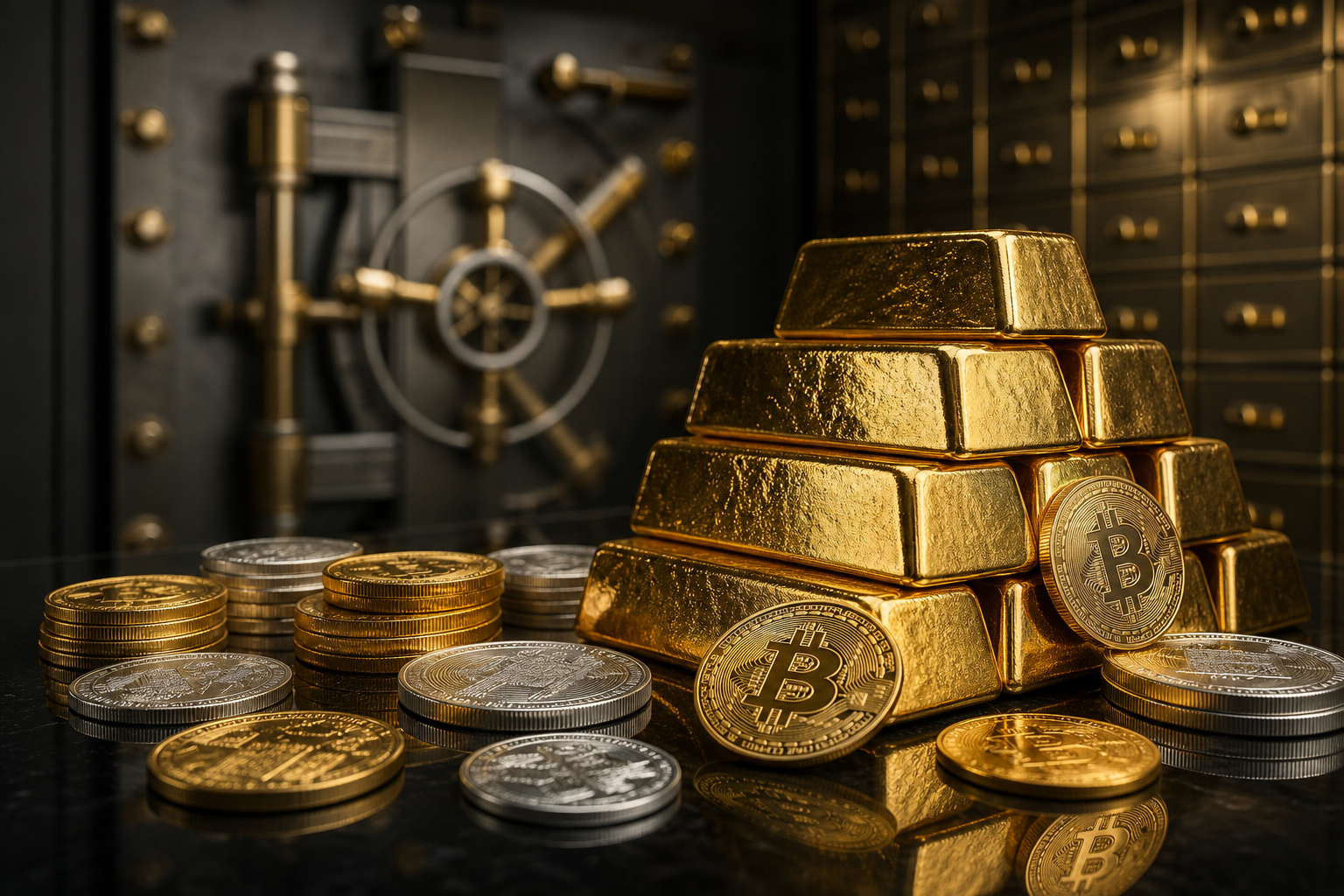
Bitcoin y el oro físico son el par de barra de pesas más natural disponible para un inversor particular hoy en día. Comparten una propiedad fundamental — la escasez genuina — pero la expresan de maneras completamente distintas. Comprender esa diferencia es lo que hace poderosa la combinación.
---
Qué hace escaso a cada activo
Bitcoin: escasez algorítmica
La oferta de Bitcoin está limitada a 21 millones de monedas por código. Ningún banco central, ningún gobierno, ninguna empresa minera puede cambiar eso sin el consenso de toda la red. Cada cuatro años, la recompensa por bloque se reduce a la mitad, haciendo que la producción de nueva oferta sea progresivamente más difícil. La escasez aquí está garantizada por las matemáticas y el consenso distribuido.
El precio a pagar es la volatilidad. Bitcoin puede perder entre el 50 y el 80% de su valor en un mercado bajista y recuperarse hasta nuevos máximos en el siguiente ciclo. Es una apuesta a largo plazo, de alta convicción, sobre que el dinero digital se convierta en un activo de reserva global.
Oro: escasez geológica
La escasez del oro está impuesta por la física y la química. No puede sintetizarse a bajo coste. Todo el oro extraído a lo largo de la historia de la humanidad llenaría aproximadamente tres piscinas olímpicas y media. La oferta anual procedente de las minas crece alrededor de un 1–2% al año — más lentamente que la mayoría de las masas monetarias fiduciarias.
El oro físico custodiado en una cámara acorazada asignada no tiene ningún riesgo de contraparte. No es la deuda de nadie. No llega a cero. Ha preservado el poder adquisitivo a lo largo de siglos y monedas.
---
Por qué el centro es la parte peligrosa
Los consejos de cartera convencionales llenan el centro con bonos gubernamentales y acciones de gran capitalización. Ambos conllevan riesgos significativos de contraparte e inflación. Los bonos son promesas explícitas de gobiernos con una larga historia de devaluación monetaria. Las acciones son derechos sobre beneficios empresariales que pueden diluirse, regularse o verse perturbados.
La barra de pesas evita todo esto. Se acepta la volatilidad de Bitcoin a cambio de un potencial alcista asimétrico. Se acepta el ritmo más lento del oro a cambio de una estabilidad genuina y un riesgo de impago nulo. Los dos activos están en gran medida descorrelacionados durante la mayoría de los ciclos de mercado, lo que significa que no tienden a caer al mismo tiempo.
---
Cómo pensar en la ponderación
No existe una proporción universal — depende de su horizonte temporal, la estabilidad de sus ingresos y su tolerancia al riesgo. Sin embargo, algunos principios pueden orientar la decisión:
- Cuanto más volátiles sean sus ingresos o su situación vital, mayor debería ser el peso hacia el oro. El oro es el amortiguador.
- Cuanto más largo sea su horizonte temporal, más podrá tolerar las caídas de Bitcoin. Quien ha mantenido durante 10 años ha sobrevivido a todos los ciclos hasta ahora.
- Un punto de partida habitual que muchos inversores autónomos comentan se sitúa en torno al 60–80% en oro y el 20–40% en Bitcoin — pero se trata de una decisión personal, no de asesoramiento financiero.
- Reequilibre de forma deliberada. Cuando Bitcoin sube con fuerza en un mercado alcista, tomar algunas ganancias y convertirlas en oro físico es una manera disciplinada de consolidar beneficios sin abandonar por completo el ecosistema del dinero sólido. Consulte nuestro artículo anterior en el Journal sobre cómo trasladar ganancias cripto a oro físico durante un mercado alcista.
---
La configuración práctica
La barra de pesas solo funciona si ambas patas se mantienen correctamente.
Para Bitcoin: la autocustodia en una cartera de hardware elimina el riesgo de contraparte asociado a los exchanges. Usted guarda las claves; usted posee el activo.
Para el oro: el almacenamiento asignado y segregado en una cámara acorazada suiza elimina el riesgo de contraparte en el lado físico. Su metal está registrado a su nombre, almacenado por separado y asegurado. Puede verificarlo y, si lo desea, solicitar su entrega física.
En SwissGoldXMR puede financiar una compra de oro directamente con Bitcoin, Monero o USDT — lo que significa que puede reequilibrar de una pata de la barra a la otra sin tocar en ningún momento el sistema bancario tradicional. La prima de compra es un transparente 2%, y el diferencial de recompra es del 1%, por lo que el coste de moverse entre los dos activos es predecible. Explore el catálogo para ver los pesos y formatos disponibles actualmente, o lea cómo funciona si está configurando su cuenta por primera vez.
---
Una cartera construida para la incertidumbre
Nadie sabe qué riesgos dominarán la próxima década — inflación, deflación, fracturas geopolíticas, disrupción tecnológica, o algo que todavía nadie ha nombrado. La barra de pesas no exige que usted haga predicciones. Le posiciona para sobrevivir a los extremos y participar en el potencial alcista del dinero digital sólido, manteniendo al mismo tiempo una base que ha sobrevivido a todas las crisis monetarias de la historia registrada.
Si está listo para añadir la pata física a su barra de pesas, explore las opciones de custodia en cámara acorazada y de recompra para entender exactamente cómo se custodiaría su oro y cuánto costaría salir cuando lo necesite.
¿Listo para tener metal suizo de verdad?
Explorar el catálogo