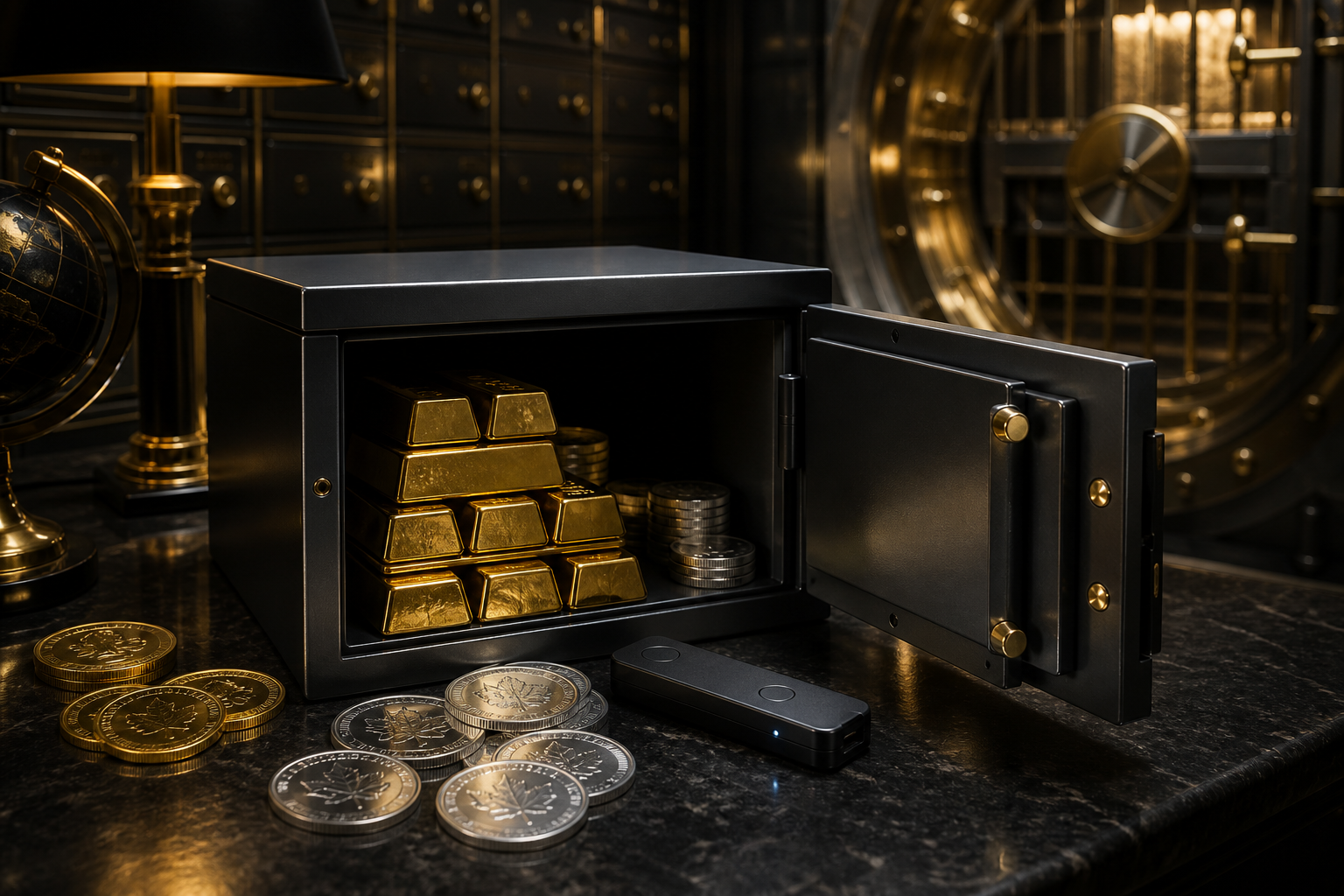
Cuando las cripto caen, el oro no las sigue
Los mercados bajistas de criptomonedas son brutales. Bitcoin ha perdido más del 70% de su valor en cada uno de sus grandes desplomes. Las altcoins pierden habitualmente el 90% o más. Para cualquier persona con una cartera muy orientada hacia activos digitales, esas caídas no solo son dolorosas sobre el papel — la recuperación puede llevar años.
El oro físico se comporta de manera diferente. No porque sea una cobertura mágica, sino por lo que es en esencia: una reserva de valor densa, finita y reconocida mundialmente, sin emisor, sin contraparte y sin ningún servidor que pueda desconectarse.
Entender *por qué* el oro diverge de las criptomonedas durante los mercados bajistas permite utilizarlo de forma más deliberada — no como especulación, sino como una capa estabilizadora.
Los mecanismos de la divergencia
Bases de inversores diferentes
Los mercados de criptomonedas están dominados por inversores minoristas, traders de momentum y posiciones apalancadas. Cuando el sentimiento cambia, las liquidaciones forzadas se propagan en cascada por el mercado. La base de inversores del oro es estructuralmente diferente: bancos centrales, inversores institucionales, fondos de pensiones y tenedores privados a largo plazo. Estos participantes no venden en pánico porque un tuit haya movido un gráfico.
Flujos de liquidez durante los episodios de aversión al riesgo
Cuando los inversores reducen el riesgo de forma generalizada — ya sea provocado por un colapso cripto, un shock macroeconómico o un evento crediticio — el capital tiende a rotar hacia activos percibidos como seguros. El oro desempeña ese papel desde hace siglos. Es líquido en todos los grandes centros financieros, cotiza en un mercado global profundo y no conlleva riesgo de impago.
Esto no significa que el oro suba siempre que las cripto caigan. Pero sí significa que es mucho menos probable que el oro caiga *porque* las cripto hayan caído.
Sin apalancamiento, sin liquidaciones
Uno de los principales impulsores de los desplomes cripto es el desmantelamiento de posiciones apalancadas. Los futuros, los perpetuos y los protocolos de préstamo amplifican tanto las ganancias como las pérdidas. El oro físico no presenta ninguna de estas fragilidades estructurales. Usted posee el metal directamente. No existe ninguna llamada de margen sobre un lingote de oro guardado en una cámara acorazada suiza.
Cómo se manifiesta la divergencia en la práctica
Durante los períodos de estrés generalizado en las criptomonedas, una cartera dividida entre activos digitales y oro físico tiende a mostrar:
- Menor caída máxima — la relativa estabilidad del oro amortigua el descenso global
- Volatilidad reducida — la volatilidad anualizada del oro es típicamente una fracción de la de Bitcoin
- Opcionalidad preservada — como el oro mantiene su valor, se dispone de reservas para volver a entrar en cripto a precios más bajos sin tener que vender con pérdidas
Este último punto suele subestimarse. Si toda su cartera está en criptomonedas y cae un 80%, no le queda nada que desplegar en los mínimos. Si el 20–30% está en oro físico y se mantiene estable, dispone de capital real precisamente cuando los activos cripto están más baratos.
Por qué el físico y no el papel
Este efecto estabilizador depende de mantener metal físico asignado — no un ETF, no un contrato de futuros, no un token que pretenda representar oro. Los instrumentos de oro en papel conllevan riesgo de contraparte: pueden ser suspendidos, rehipotecados o simplemente no lograr replicar el precio al contado bajo presión. En una crisis real, la brecha entre las reclamaciones en papel y el metal físico tiende a ampliarse.
El oro físico almacenado en una cámara acorazada suiza segregada es suyo. No aparece en el balance de nadie más. Esa distinción importa más precisamente cuando los mercados están bajo mayor presión. Puede explorar cómo funciona el almacenamiento asignado en Cámara suiza y recompra.
Dimensionar la asignación
No existe una respuesta universalmente correcta, pero vale la pena considerar algunos principios:
- Adapte la asignación a su tolerancia al riesgo — cuanto más volátiles sean sus posiciones en cripto, mayor será el valor estabilizador del oro
- Piense en porcentajes del patrimonio total, no solo del tamaño de la cartera cripto
- Reequilibre de forma deliberada — tras un mercado alcista cripto, los beneficios convertidos en oro consolidan las ganancias y reconstruyen la capa estabilizadora (consulte nuestro artículo en el Journal sobre la toma de beneficios en metal físico)
- No asigne en exceso — el oro no se capitaliza; preserva. Mantener demasiado sacrifica el potencial de crecimiento a largo plazo
Una horquilla del 15–30% de los activos invertibles totales en oro físico es un punto de partida habitual para carteras con gran exposición a cripto, aunque sus circunstancias personales deben guiar la decisión.
Una base sólida para una estrategia volátil
Las criptomonedas ofrecen un potencial alcista asimétrico. El oro ofrece una resiliencia asimétrica. No compiten entre sí — cumplen funciones diferentes dentro de la misma cartera.
Si aún no ha construido esa capa física, explorar el catálogo es un punto de partida sencillo y directo. La compra con criptomoneda lleva solo unos minutos, y su metal se custodia en almacenamiento suizo segregado desde el primer día.
¿Listo para tener metal suizo de verdad?
Explorar el catálogo