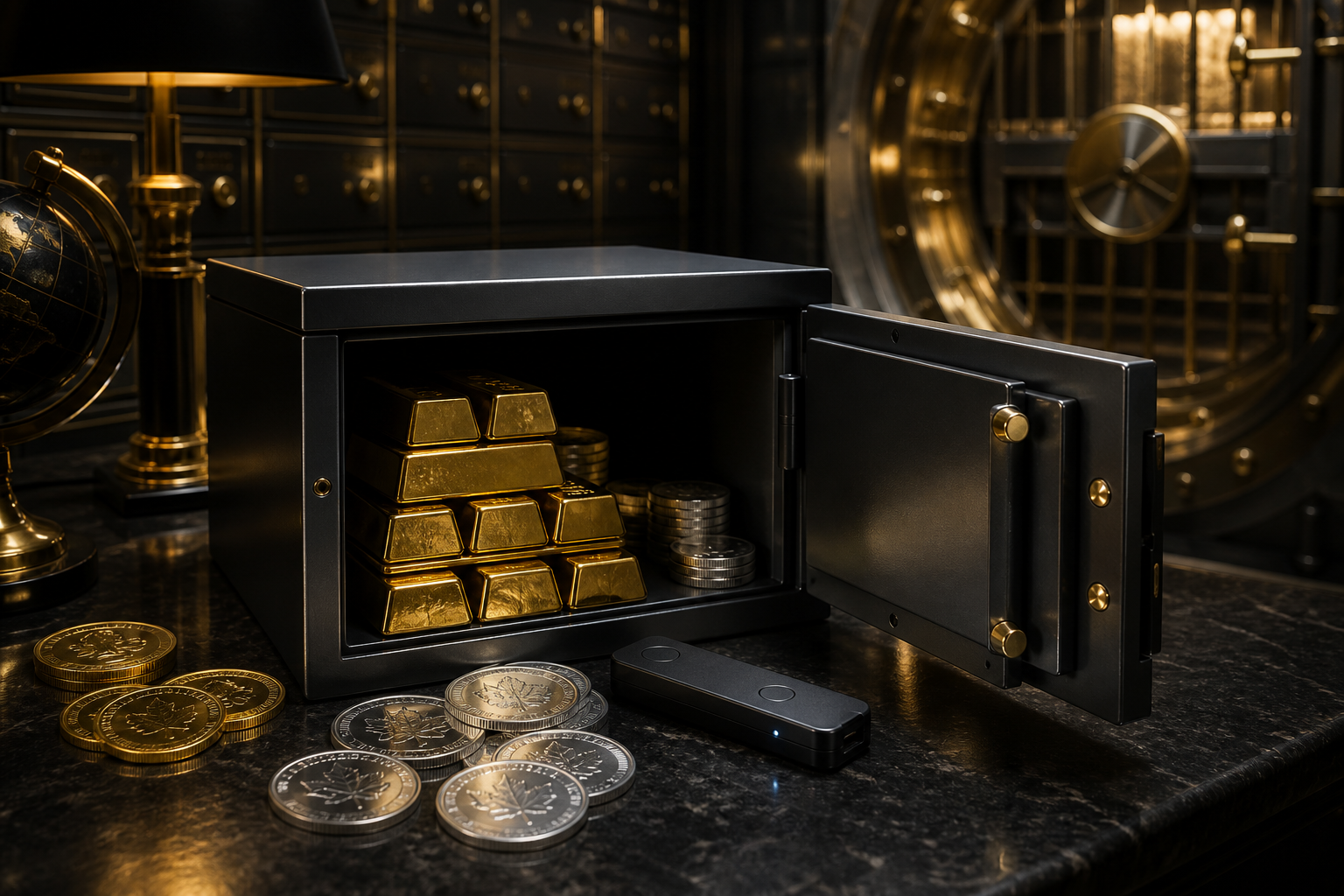
Cuando las cripto caen, ¿adónde va tu patrimonio?
Todo inversor en criptomonedas atraviesa tarde o temprano un mercado bajista. Los precios caen un 50%, un 70%, a veces más. La liquidez se agota. El sentimiento se vuelve tóxico. Y la pregunta que surge — generalmente demasiado tarde — es: *¿qué hay en mi cartera que realmente está manteniendo su valor ahora mismo?*
El oro físico ha respondido a esa pregunta en repetidas ocasiones. No porque se dispare al alza durante las caídas cripto, sino por algo más útil: tiende a no caer junto a ellas.
Activos distintos, lógicas distintas
Los mercados cripto están impulsados por el apetito por el riesgo, el apalancamiento y los ciclos narrativos. Cuando esos ciclos se invierten, los activos correlacionados — altcoins, acciones vinculadas a cripto, incluso Bitcoin a corto plazo — tienden a caer al unísono.
El oro responde a un conjunto de factores completamente diferente:
- Incertidumbre monetaria y demanda de los bancos centrales
- Tipos de interés reales (el oro tiende a fortalecerse cuando los rendimientos reales son bajos o negativos)
- Tensiones geopolíticas y flujos hacia activos refugio
- Preocupaciones por la devaluación monetaria en horizontes plurianuales
Ninguno de estos factores está significativamente correlacionado con si un protocolo DeFi se está deshaciendo o si un gran exchange afronta problemas de insolvencia. Esa independencia estructural es precisamente lo que hace útil al oro.
El patrón en la práctica
Durante el mercado bajista cripto de 2018, Bitcoin cayó aproximadamente un 84% desde su máximo. En el mismo período, el oro retrocedió modestamente — unos pocos puntos porcentuales — antes de recuperarse. Durante el ciclo de 2022, cuando Bitcoin pasó de alrededor de 69.000 USD a menos de 16.000 USD, el oro cerró el año prácticamente plano en términos de dólares, a pesar de importantes vientos en contra macroeconómicos, incluidas agresivas subidas de tipos.
Esto no es una garantía. El oro puede y sabe caer en ciertos entornos — especialmente cuando el dólar estadounidense se fortalece bruscamente o cuando los inversores venden todo para atender llamadas de margen. Pero la *magnitud* y la *duración* de las caídas del oro han sido históricamente mucho menores que las observadas en los mercados bajistas cripto.
El resultado práctico: una cartera que combina ambos activos tiende a experimentar un drawdown total menor que una invertida exclusivamente en cripto.
Por qué el metal físico en concreto
No todas las exposiciones al oro se comportan igual. Los ETF de oro, los futuros y las acciones mineras introducen cada uno capas de riesgo de contraparte, riesgo de estructura de mercado o apalancamiento operativo que pueden hacer que diverjan del precio spot — a veces de forma pronunciada, y a menudo en los peores momentos.
El oro físico asignado — metal que es legalmente tuyo, almacenado a tu nombre en una cámara acorazada — no conlleva nada de eso. No hay emisor que pueda incumplir. No hay fondo que pueda bloquear los reembolsos. El metal existe con independencia del balance de cualquier institución financiera.
Esto importa más precisamente cuando los mercados están bajo presión. Si quieres que el oro funcione como estabilizador durante un mercado bajista cripto, necesitas la versión que no puede ser rehipotecada, suspendida ni reestructurada. Puedes consultar cómo funciona el almacenamiento asignado en Cámara suiza y recompra.
¿Qué nivel de asignación tiene sentido?
No existe una respuesta universal, pero vale la pena considerar algunos principios:
- Ponderación por volatilidad: la volatilidad anualizada del oro es típicamente del 10–15%. La de Bitcoin ha sido históricamente del 60–80%+. Una pequeña asignación en oro puede compensar una parte significativa de la varianza de una cartera cripto.
- Correspondencia con la liquidez: el oro mantenido para la estabilidad de la cartera debe dimensionarse de modo que nunca sea necesario venderlo bajo presión. No es una posición de trading.
- Conversión de ganancias: las ganancias cripto obtenidas en mercados alcistas son una fuente obvia de capital. Convertir una parte en oro físico preserva el poder adquisitivo sin volver a entrar en fiat.
Algunos inversores aplican una regla sencilla: por cada ganancia cripto significativa realizada, un porcentaje fijo se destina a metal físico. Otros establecen una asignación objetivo — por ejemplo, el 15–25% del patrimonio total — y reequilibran tras movimientos importantes del mercado.
Punto de partida
Si tienes criptomonedas y nunca has poseído oro físico, la barrera práctica es menor de lo que la mayoría de la gente supone. Puedes explorar los metales disponibles en el catálogo y ver exactamente cómo funciona el proceso de compra y almacenamiento en cómo funciona. Las primas son transparentes, el almacenamiento es asignado y la facilidad de recompra garantiza liquidez cuando la necesitas.
La idea central
El oro no hace que una cartera sea emocionante. La hace duradera. En un mercado bajista cripto — cuando el apalancamiento se deshace, las narrativas colapsan y los activos correlacionados caen juntos — esa durabilidad es exactamente lo que le falta a la mayoría de las carteras.
Si estás considerando añadir oro físico como posición estabilizadora, ahora es un buen momento para entender los mecanismos y empezar con poco.
¿Listo para tener metal suizo de verdad?
Explorar el catálogo